The first question that comes up when buying knee sleeves for squats is simple:
Should I go with 7mm or 5mm knee sleeves?
Both look similar. Both are made from neoprene. Both promise support.
But choosing the wrong thickness can lead to knee pain, poor performance, or wasted money.
Let’s break it down in the easiest way possible so you can pick the right knee sleeves for your squats.
Quick Answer (If You’re in a Hurry)
- Choose 7mm knee sleeves if you:
- Squat heavy
- Train powerlifting or strength-focused
- Want maximum knee support and stability
- Choose 5mm knee sleeves if you:
- Do moderate-weight squats
- Train CrossFit, gym workouts, or high reps
- Want comfort and mobility
Now let’s explain why
What’s the Real Difference Between 7mm and 5mm Knee Sleeves?
The main difference is thickness, and thickness directly affects:
- Support
- Compression
- Warmth
- Squat performance
7mm Knee Sleeves
- Thicker neoprene
- Very tight compression
- Maximum knee support
- Less flexibility
5mm Knee Sleeves
- Thinner neoprene
- Moderate compression
- More flexible
- Easier to move in
Which One Is Better for Squats?
7mm Knee Sleeves for Squats (Best for Heavy Lifting)
If your knees hurt during heavy squats or feel unstable at the bottom, 7mm sleeves are usually the better choice.
Why lifters prefer 7mm for squats:
- Keeps knees warm and protected
- Adds stability at the bottom of the squat
- Helps you feel more confident under heavy weight
- Reduces knee stress during low reps (1–5 reps)
Best for:
- Powerlifters
- Strength athletes
- Heavy back squats & front squats
- People squatting near max weights
Downside:
- Can feel tight and uncomfortable at first
- Not ideal for long workouts or high reps
5mm Knee Sleeves for Squats (Best for Comfort & Training)
5mm knee sleeves work well if you squat regularly but don’t lift extremely heavy.
Why some lifters choose 5mm:
- Easier to move
- Comfortable for long sessions
- Good knee warmth without feeling stiff
- Better for mixed workouts
Best for:
- Gym training
- CrossFit
- Beginners to intermediate lifters
- High-rep squats and circuits
Downside:
- Less support under heavy loads
- Not ideal if you have knee pain during max lifts
If Your Knees Hurt During Squats — Which Should You Choose?
This is a major pain point, so let’s be clear.
- If knee pain happens only when squatting heavy → 7mm
- If knee pain is mild or from cold joints → 5mm
- If you feel unstable at the bottom → 7mm
- If pain comes from overuse or long sessions → 5mm
Most people with knee pain during squats feel more relief with 7mm sleeves due to stronger compression.
Can Beginners Use 7mm Knee Sleeves?
Yes — but only if they squat heavy.
If you’re a beginner lifting light weights, 5mm is usually enough.
Using 7mm too early can:
- Feel uncomfortable
- Limit natural knee movement
- Be unnecessary
Do 7mm Knee Sleeves Increase Squat Weight?
They don’t magically add strength, but they help indirectly.
Studies show that neoprene knee sleeves:
- Improve joint warmth
- Increase knee stability
- Improve confidence under load
A study published in Sports Biomechanics found that knee sleeves can improve squat performance by improving joint mechanics and confidence under load (Source: Sports Biomechanics Journal).
This is why most powerlifters choose 7mm sleeves for squats.
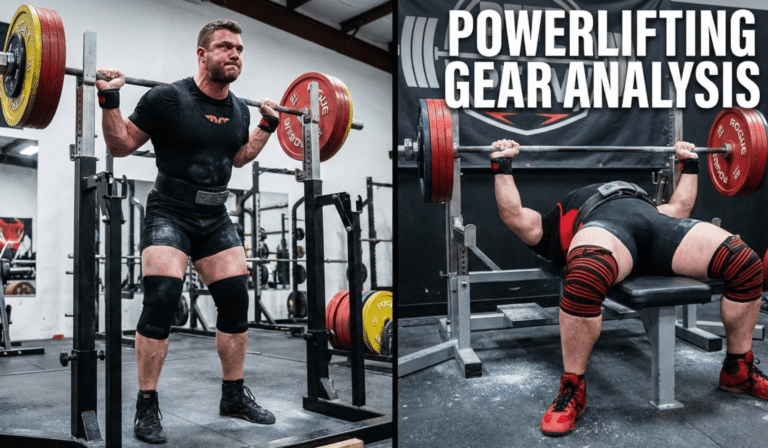
Which Thickness Do Powerlifters Use?
Almost all competitive powerlifters use:
7mm knee sleeves
Reasons:
- Legal in competitions
- Maximum allowed thickness
- Best support for heavy squats
Should You Own Both 7mm and 5mm?
If budget allows — yes.
- Use 7mm for:
- Heavy squat days
- Max attempts
- Low-rep strength training
- Use 5mm for:
- Warm-ups
- Volume days
- Conditioning workouts
Final Verdict: 7mm vs 5mm for Squats
Choose 7mm knee sleeves if:
- Squats are your main lift
- You train heavy
- You want knee protection and stability
Choose 5mm knee sleeves if:
- You want comfort
- You do mixed workouts
- Squats are not always heavy
If your goal is stronger squats with safer knees,
7mm knee sleeves are the better option for most lifters.